Genting UK Executive Raises Concerns Over Potential Machine Games Duty Increase
Finley Lang · Oct 3, 2026

Genting UK Executive Raises Concerns Over Potential Machine Games Duty Increase
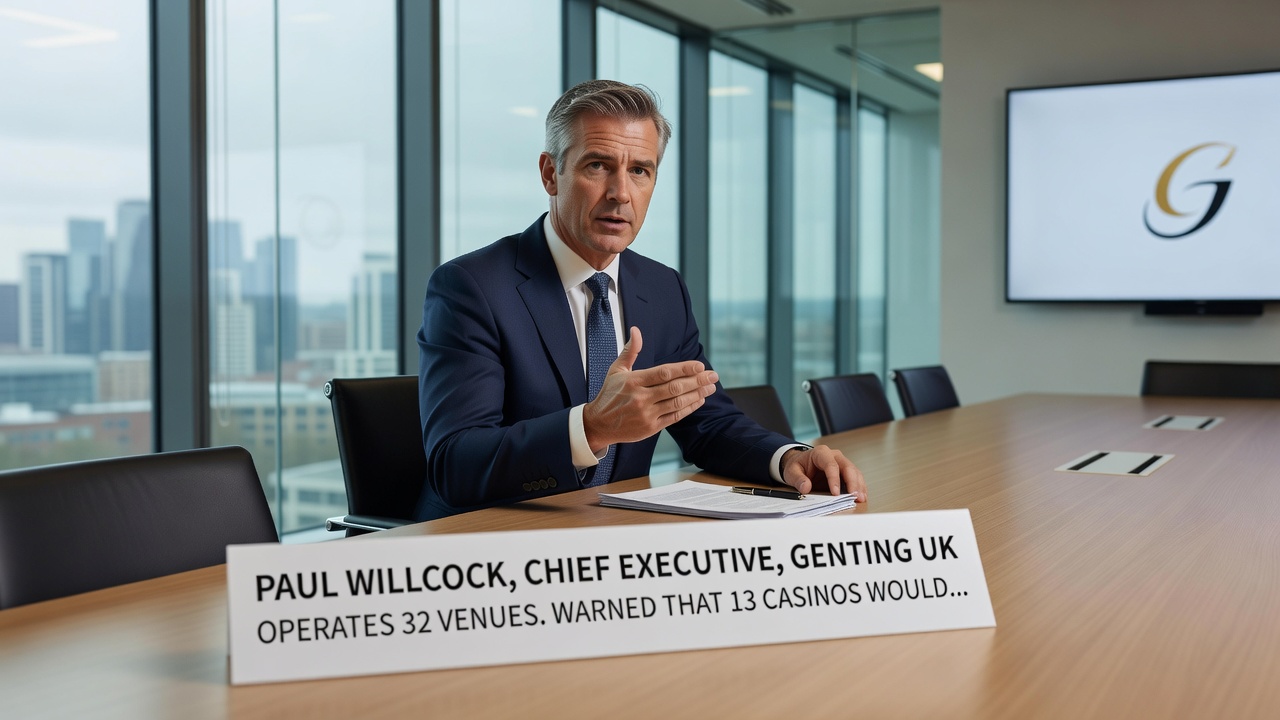
Paul Willcock, chief executive of Genting UK which operates 32 venues across the country, issued a warning that 13 casinos would become unprofitable or unsustainable and would need to close if Chancellor John Healey doubles Machine Games Duty on slot machines and fixed-odds betting terminals from 20% to 40% in the October 28 Budget, a move that would put around 900 jobs at risk and cost the company more than its recent post-tax profit.
The statement comes amid discussions about tax policy changes that could affect the gaming sector directly, and it follows a similar warning from Rank Group, owner of Grosvenor Casinos, the previous week. The idea for the tax hike originated in a July proposal from the Social Market Foundation think tank, which suggested adjusting rates on certain gaming machines to address fiscal needs.
Background on the Proposed Duty Change
Observers note that Machine Games Duty currently stands at 20% for many terminals and slots found in casinos, and doubling it would represent a significant shift in operating costs for operators like Genting UK. Those who've studied the proposal point out that the change targets specific categories of machines, including fixed-odds betting terminals, which generate substantial revenue in these venues. Data from industry reports indicates that such machines contribute heavily to overall profitability, making any rate adjustment a key factor in venue viability assessments.
Experts have observed that the October 28 Budget date marks a critical point where these adjustments could take effect, potentially reshaping how casinos manage their machine inventories and staffing levels. Researchers discovered in related analyses that higher duties often lead operators to evaluate site closures when margins tighten beyond certain thresholds, and the current scenario aligns with that pattern for Genting UK's portfolio.
Scale of Potential Impact on Operations
Genting UK's network spans 32 venues, yet the warning specifies that 13 of them would face closure under the doubled rate because they would no longer cover costs effectively. This figure represents roughly 40% of the company's sites, highlighting how concentrated the effects could become in locations with lower footfall or higher overheads. The projected job losses total around 900 positions, covering roles from floor staff to management teams that support daily operations.
Financial details shared in the warning reveal that the additional tax burden would exceed the company's recent post-tax profit, creating a situation where continued operations at those sites become untenable without major restructuring. People who've tracked similar fiscal measures note that operators often respond by consolidating resources into fewer, more profitable locations rather than absorbing sustained losses across the full estate.
Context from Prior Industry Statements
Rank Group's announcement the week before outlined comparable risks for its Grosvenor Casinos chain, suggesting that multiple operators see the duty adjustment as a threat to existing business models. The Social Market Foundation's July proposal provided the initial framework for the 40% rate, framing it as a way to balance public finances while targeting specific gaming activities. According to available records, this think tank document sparked the broader debate that now includes direct responses from major players like Genting UK.
Those familiar with the sector point out that such warnings serve as early indicators of how policy shifts ripple through employment and local economies tied to casino venues. Figures reveal that casino operations support not only direct jobs but also supply chains and related services, amplifying the stakes when closures enter the picture.
Timeline and Next Steps in the Budget Process
The October 28 Budget date sets the stage for formal announcement of any duty changes, with implementation likely following in subsequent months if approved. Willcock's comments emphasize the need for clarity before final decisions, as operators require time to adjust strategies around machine deployment and site management. But here's the thing: waiting until the announcement leaves limited room for contingency planning, especially when profit margins already sit close to the edge for certain locations.
Industry participants often review proposals like this one through the lens of historical adjustments to gaming taxes, where incremental increases produced varied outcomes depending on venue scale and regional demand. The current 20% rate has remained in place for an extended period, allowing businesses to factor it into long-term projections, whereas a jump to 40% would reset those calculations abruptly.
Conclusion
The warnings from Genting UK and Rank Group illustrate how the proposed Machine Games Duty increase could affect multiple operators in similar ways, with specific numbers around closures, jobs, and financial thresholds providing concrete benchmarks for evaluation. The July proposal from the Social Market Foundation continues to influence the conversation leading into the October 28 Budget, where Chancellor John Healey will outline final terms. Data on current operations shows the potential scale of change across 32 venues and beyond, setting the parameters for what follows if the rate adjustment proceeds as discussed.